Wednesday, January 9, 2013

Icelandic Forests

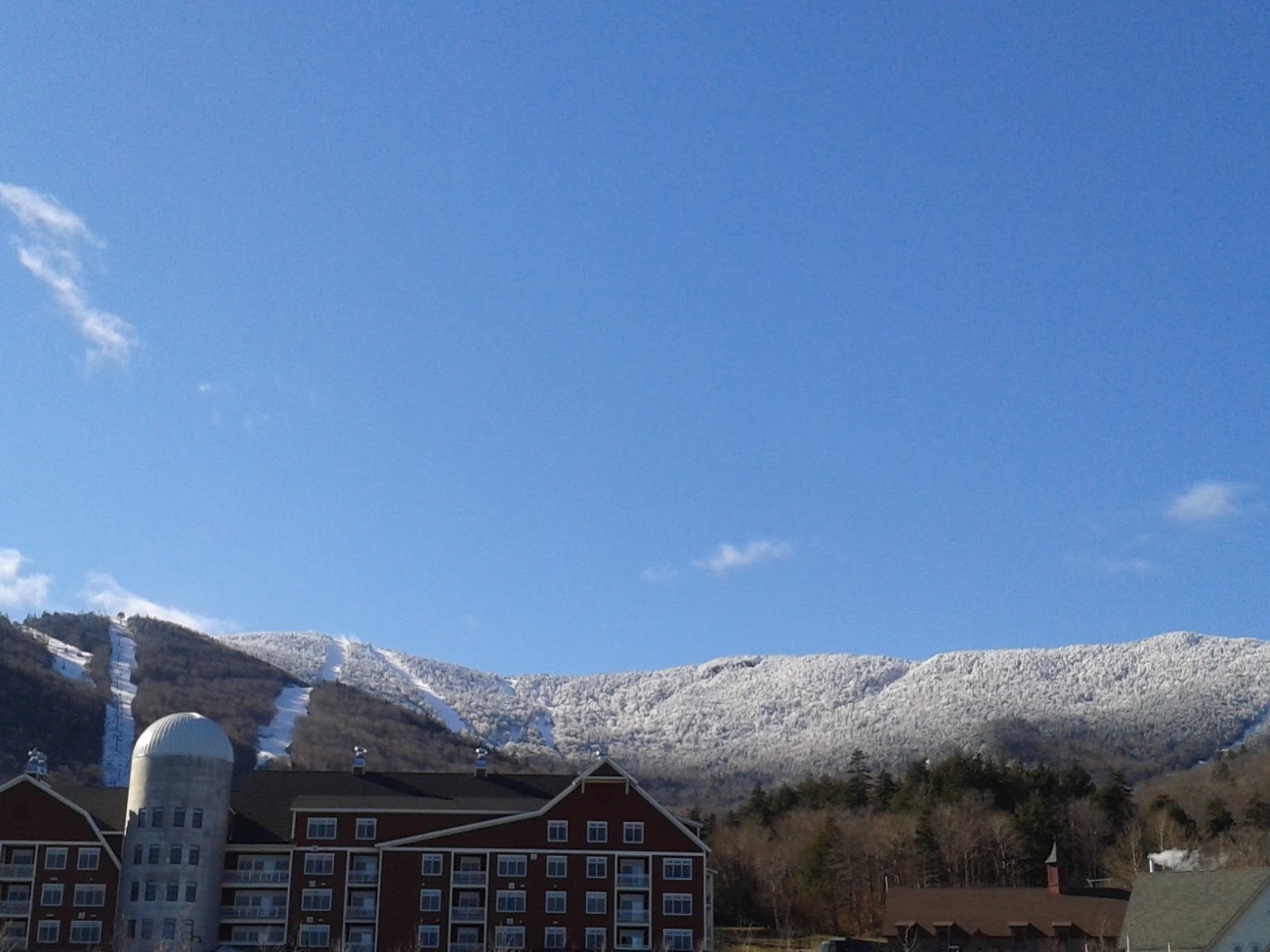
January 5, 2013 at the top of North Lynx at Sugarbush
There’s an old joke about Iceland and the absence of trees in the countryside: What do you do if you’re lost in an Icelandic forest? Stand up!

I often make reference to altitude when teaching skiing. For me it’s about how close to the details we are and the need to rise to a higher elevation to make sure we can put the details into proper perspective lest they become pixelated. It's not just about effective teaching: striking a balance between being down in the details and being high enough to see the big picture is absolutely essential if we’re going to continue to share in the joy of our guests' skiing.
The truth about this idea of altitude adjustment is that it’s also a cautionary piece of advice generally for those of us who have made our passion for skiing and riding our careers. Too often professionals in the industry either lose sight of the real reason that we’re all here in the first place or we simply lose the ability to find that joy in skiing and riding. I’ve written about this on several occasions before, but for me this year it has particular resonance and I have found that perspective, that view from a higher elevation, in some places that I might not have expected.
At Sugarbush, we have a great program for new skiers and riders. It’s called First Timer to Life Timer and it’s a lift, rentals and lesson package that includes three two-hour group lessons. What makes it unique in the industry is that upon completion of a guest’s third lesson, they receive an all-mountain season pass to the resort. There are a number of aspects of the experiences we and our guests have with this program that are really terrific, but none more so than the celebrations that spontaneously break out when people receive their first season pass after only a few days of skiing and riding. Spouses, parents, children, friends, instructors, supervisors, sales staff, random passers-by and even the Director of the Ski & Ride School give and receive hugs, high five each other, make funny faces when posing for pass photos, and generally have an amazing time with what has become a sort of joyous initiation rite for new skiers and snowboarders. It’s absolutely fantastic, and even the most jaded, downtrodden old pro who has been too close to the details for too long would find the experience elevating. It definitely is a wonderful perspective-refreshing tonic. And there are others.

I have several friends around the industry and at home who have been going out of their way to make sure that despite the amount of work I’ve been putting in and the size of the challenge I face in my new role that I continue to be able to see the big picture. Some young kids who made their way with their parents to Sugarbush from Okemo specifically to ski with me over the holidays all drew crayon pictures of our time on the hill together, made thank-you notes on them, and then sent them to me via FedEx last week. A couple of my new colleagues in particular have proven to genuinely interested in making sure that I remain true to principle, that I can keep the big picture in focus, taking in the view from 30,000 feet, so to speak, and it’s been much appreciated.
And occasionally, on days off like today, I get to free ski, out of uniform, at home and away from the resort where I work. Today was like a one day vacation where I was a simple skier, enjoying an awesome morning of making relaxing turns with a good friend, occasionally bumping into other folks that I was genuinely happy to see, who were genuinely curious about how things are going for me, and who did not under any circumstances want to talk about work. Together with great conditions, a quiet day around my old stomping grounds, and beautiful weather, and it definitely provided a mind clarifying bit of skiing that was gobs of fun and rejuvenating to my spirit. My point is definitely not to be taken as a negative comment about where I work (or about any other work place), but more about the benefits of taken a step back, or a step away, from them from time to time.

There’s nothing quite like high altitude to engender a philosophical mindset. Whether it’s astronauts on the moon looking back to the earth, mountain climbers at the summit of some great peak, or even weary travelers simply gazing out of airplane windows, elevation provides a big picture view that puts things in perspective. In Iceland, that may mean simply standing up when lost in a forest. For me in the ski industry, it means lots of little things and opportunities that I need to take hold of and appreciate.  And most of them involve simply skiing and spending time with people who love it simply. I find that, more and more, I’ve been seeking out those moments, I’m very grateful when I find them, and that they definitely make me better at and more appreciative of my job and my place in the industry.

Wednesday, December 12, 2012

Training, Training the Trainers, and Training the Trainers' Trainers

Just one of the views from Sugarbush on December 10, 2012
In the corner of the universe inhabited by ski and snowboard instructors, training is a central focus. Ongoing, topical training serves several concurrent purposes: it is the principal way in which our snowsports schools exercise quality control; training fosters a work environment (and a workforce) that is healthy and supportive of personal growth; it assists all of us in making sure that we are continuing to evolve as skiers, riders, thinkers and teachers; and all of the foregoing really helps us stay in a mindset that allows us to provide exceptional experiences for our guests as their teachers.

With Sugarbush opening on time this season, we were able to conduct a ‘Train the Trainers Day’ on snow for the first time in a while. Those of us on the training staff were able to ski together for the day, walk through the clinics we required for all instructors on our staff, and generally make sure we’re all on the same page for our season-long training program. The day was a blast, and it gave me confidence that I’ll be able to effectuate a positive change in our organizational culture and in the quality of the product we deliver on the hill.

Training can be a large expense for snowsports schools and those of us in management occasionally have to make the case that including more training in our budgets is money well-spent. Those times are an important gut check for us, putting us in a position to make a business-focused argument for why training is so important. It’s a similar argument made by environmentalists arguing that being green is good for business – it’s an upfront cost that generates better quality, a better experience, and more business as a consequence. Those snowsports schools with large and well-managed training programs and staffs that have an expectation that ongoing training is a normal and desirable part of their everyday existence as pros tend to be the most successful in the business. It’s not a coincidence.

One of the issues I’ve faced over the past eight years since achieving my ‘full cert’ – my PSIA Level III, the highest certification available in the USA – is that I’ve received precious little training. I’ve conducted an awful lot of training clinics for instructors, both at the resorts where I work and elsewhere, but I’ve been battling my constant fear that I’ll plateau as a skier and as a ski teacher. It’s left me to have to occasionally seek out training, sometimes far from home and at significant expense. It’s always worthwhile, but the fact is that those days where I can focus on my own continuing development are too few and far between. That is, until next week.

I’ve been invited to participate in an extraordinary block of training. A few of us, very few, who are at approximately the same level within PSIA and in the industry here in the Eastern USA have the opportunity to spend several days next week training with the PSIA National Alpine Team Coach, Rob Sogard. The PSIA National Alpine Team (like its snowboard, nordic and adaptive siblings) is more than simply the national team of ski instructors. The team is responsible for the continuing development of the American Teaching System, for developing national programs and standards, and for generally setting the tone and agenda for snowsports teaching in America. There’s a lot of very effective trickle down between the national team members and local, entry-level instructors, and the various rungs on the PSIA ladder and each resort’s training staff are the principal vehicles for this. What this means for me is that next week I’ll get a significant chunk of time to hone my skiing, my understanding of skiing, my teaching, and my awareness of where skiing is headed from the very best in the business.

I have significant anxiety about taking the time away from work next week, but my expectation is that I’ll be able to bring my experience home to Sugarbush and share it in a meaningful way with our staff. Ultimately, the goal is to transfer all that I learn through to our guests, though I definitely won’t be explaining to our guests about my time spent with the trainers’ trainers’ trainer. So, it’s back to school for me even if only for a few days, and I just can’t wait!

Saturday, November 10, 2012

The Coach

Lincoln Peak at Sugarbush on November 6, 2012
I made my first turns of the season this morning. It’s November 10th. Let’s pause and let that sink in for a moment. November 10th. With Sugarbush Resort’s planned opening not until next Saturday, this morning I stepped out of the door of my home in Ludlow and skied my old hill, Okemo, which opened for the season this past week. No, it has no bearing on how the rest of the season will go. No, it is not an indication of anything other than a particularly cold few weeks in November. No, the conditions were not particularly good and there wasn’t a lot of terrain open. But yes, it is November 10th. Amazing.

Some of the sights and sounds of the ski season are less poetic in the telling than others. We can wax on about the wind rushing past, the sensations of our skis, of gravity drawing us down the mountain, of our joints and muscles going through the tried and true movements of skiing, simultaneously getting the blood flowing and putting our minds and spirits at ease. And yet, these weren’t the things that made the day so familiar, such a joyful indicator that ski season has finally arrived after a long two months off of snow since my return from New Zealand (yes, I know, poor me).

Having changed resorts, changed roles, and changed perspectives, parts of the day definitely felt a bit odd. I parked in a public lot instead of where I have among the other staff vehicles for the past decade. I walked into the base lodge to change, carrying my equipment with me rather than merely walking empty-handed into the locker room. I spent the morning by myself, doing top-to-bottom runs on the only top-to-bottom run that was entirely open, trying to find my rhythm in the increasingly choppy man-made snow that formed a narrow corridor on World Cup. After two hours, in need of a short break and some perspective, I went inside the summit lodge, unbuckled my boots and removed my gloves and helmet in the same way that I have in that lodge a million times as though on autopilot. And then, like Pavlov’s dog, I headed for the cafeteria and without thinking about what I was doing, I grabbed a cup from the stack and filled it half from the hot chocolate dispenser and half from the coffee urn. The moment when I realized that I had been merely going through the motions without conscious thought occurred when the cashier asked me for my pass and I realized that I no longer received my employee discount at Okemo and would have to pay full retail. I guess there’s nothing like full retail to snap anyone out of a stupor.
Our olfactory memory is more acute than that of our other senses, no less so with my go-to hot drink on a ski day. The drink is most definitely not a mochachino – it is far more of a workingman’s choice than espresso and hoity-toity chocolate. I’ve always known it to be called “the coach”, though I don't know where that comes from, and it’s sort of the ski pro’s version of an Arnold Palmer. It consists of mass-produced coffee from a huge cafeteria urn with a spigot on the bottom and hot chocolate from a major manufacturer consisting of powdered mix and hot water whirled together in a big, automated dispenser. And its distinctive taste, the sum being something far greater than the whole of its mediocre parts, is definitely something that is inseparable from and evocative of my life on skis. And I love it, for the taste, for the sensation of drinking something warm and sweet on a cold day, and for what it represents.
Skiing is both my passion and my vocation. While that sometimes means striking a difficult balance and making tough sacrifices, I love it and I wouldn’t trade it for anything. As a consequence, when I’m not in ski season I can occasionally feel a bit lost, particularly if I’ve been working so hard on ski-related things without any actual skiing, as has been the case this fall. And today, with the sights, sounds, smells and tastes of the season returning in full, something deep inside of me relaxed, basking in the warmth of all that is familiar and comfortable in the knowledge that ski season is here. Finally.

Saturday, October 27, 2012

The Ivory Tower

Yet another gorgeous fall day at the Lincoln Peak base area of Sugarbush

When I arrived at university as a Freshman all those years ago, I took the advice of a close friend of my father’s and signed up to take Economics 101 with a member of the faculty that had been his own professor thirty years prior. Yes, that meant that this professor had been there a long time and was perhaps lacking some modernity in his approach, but I was grateful for the suggestion and the course got me hooked. Four years later, I received my Bachelor’s degree in Economics. The professor (who shall remain nameless) definitely took an ivory tower approach to the teaching of Economics – the course was very heavy on theory, light on ‘modeling’, and totally devoid of finance. The Economics Department, as he took great pains to tell us, was the first organized department at this old, originally Episcopalian, traditionally liberal arts college, so the faculty knew it as the “Mother Discipline”. By mid-semester, one of my classmates asked the Prof why all of the other Econ 101 sections were spending so much time doing hard math, financial modeling and practical, real-world stuff while we were using out-of-print texts and working so hard on theory. Prof’s response, matching his demeanor, lockjaw, appearance and general world view, word for word, was “Here in the Mother Discipline, we hope that when you graduate from Trinity College, someone else will be doing that work for you.” All of us in the class had the same response – ‘I’m with that guy!’ Needless to say, it was a fanciful attitude as antiquated as believing that World War I was won on the playing fields of Eton, but it did inspire us to reach higher. Needless to say, that was a looooooong time ago, and at the time I didn’t exactly have my sights set on a career in the ski industry.

Fast forward to 2012, and I’m busy getting the Sugarbush Ski & Ride School ready for another winter here in Warren, Vermont in my first year as the Director. Virtually all snow sports schools go through the same process, and the nature of our business means that they definitely don’t fit neatly into any conventional business model we would have learned in Prof’s class. When the snow melts in Spring and the lifts stop turning, we lay everyone off only to rehire them in October. At Sugarbush, we have about 300 instructors, a bunch of supervisors, and several sales staff that report to me – all must do their intake paperwork before we can put them to work, and we need to process all of it and input them all in our HR, sales and scheduling systems. We accomplished the majority of this over the last two weeks, with me mostly watching and listening to my more experienced staff. And there’s more: ski and snowboard teaching requires a lot of knowledge, skill and training to do well, but with an amount of attrition typical in the industry this means that in the fall we hire a number of first-time instructors that we have to teach the ins and outs of what we do, introduce them to our systems, ethos, facilities, policies and programs, and then make sure we equip them to succeed as instructors. Yikes. And then we need to conduct on-snow training for all of the instructors to get them back into the groove, to enhance their abilities to teach, and to make sure our end-product is at the level of quality that we demand for our guests. This business model definitely was not covered in the pages of my dog-eared, well-worn, and long-out-of-print economics text books. Getting all of this done, keeping the staff focused on the big picture of why we’re here, keeping our passion for skiing and riding front and center, and getting ready to provide an exceptional guest experience for all ages and abilities of skiers and snowboarders so that we open in a month with all pistons firing, will be deserving of some satisfaction. Keep it up every day for a six month season outside in all kinds of weather on the slopes of a big, steep and gnarly mountain, and we’ll have accomplished a great deal. And that’s all simply the baseline expectation of our business. Don’t mistake my tone for concern or a lack of confidence – I have a terrific staff, some very capable supervisors, a kick-butt business manager and it’ll all happen in good time and in good form for our season to begin. If we do it well, we'll all get to enjoy skiing and riding a ton and will get tremendous satisfaction from making it happen for our guests.

The first time I went to New Zealand for the Southern Winter, planning what to bring and how to pack required some guess-work and a lot of reliance on what other people had told me. After six seasons down there, that guess-work is gone along with my anxiety about it, and I can pack for the summer with ease, not breaking a sweat as I account for all of the possibilities that affect what I need, what I’ll want to have with me, and what room there will be for things that make my time away more comfortable. My pre-season work-load at Sugarbush is somewhat similar, and my expectation is that in the years to come it’ll be far easier to keep all of the details in perspective so that I can stay in my more comfortable big picture view without worrying about dropping any balls.

As has always been the case with pre-season planning in all of the roles I’ve played in skiing, I am looking forward to the day when I get down to the business of the day-to-day operation of a ski and snowboard school. With a little help from Mother Nature, that day will be one month from now and when we open I may just have to make a bunch of turns for myself just to put all of it in perspective. I’ll be packed and ready, so to speak. In the interim, I’ll do my best to stay out of the ivory tower, to stay abreast of the details, and not to take for granted the people who will have done so much of the work for me.

Sunday, September 16, 2012

The Next Valley Over

This is a small slice of the view from the Lincoln Peak base area at Sugarbush.
When I’m in New Zealand during the summer / winter / whatever it is, I often encounter people who have no sense of Vermont – where we are, who we are, what it’s like culturally, topographically, economically, and so forth. In order to describe where I live and work, I usually explain that the whole place is covered by mountains, that the mountains run in ridges that are typically on a North-South axis, that at the foot of every mountain is a river on the valley bottom, that next to every river is a road, and that every town is sited at the bend in one of those rivers. Last year, it helped put the devastation of tropical storm Irene in context – the storm’s destruction made the news in New Zealand for days on end. At the moment, for me personally and professionally, this way of looking at Vermont puts my recent change of job, change of resort, and change of location in context.

Okemo is in Ludlow, which sits at a bend in the Black River as it turns to the East and makes its way towards the Connecticut River. The Connecticut is a major waterway that forms the border between Vermont and New Hampshire, travels through Massachusetts and eventually spills out into Long Island Sound at between the towns of Saybrook and Lyme, Connecticut. In the Black River Valley, the mountains are older and a little lower, so the valleys are a bit wider and shallower, and the rivers are a bit gentler, more placid. Sugarbush, where I am now the Director of the Ski & Ride School, is quite a bit further North and sits in the Mad River Valley with the towns of Warren and Waitsfield at its base. The section of mountains where Sugarbush is located is known as the “Spine of the Greens” and contains some of the highest mountains in the state – highest, steepest, and craggiest. For perspective, Mount Ellen, one of the two lift-serviced peaks in the resort, includes the longest ski lift and longest vertical drop in the state. The river is called the Mad River because, unlike every other waterway in the state, it flows from South to North, going up the valley and then around to the West before spilling into Lake Champlain. Because the peaks are so tall and steep, the valley floor is quite narrow and the towns are densely settled, with all development in Warren and Waitsfield perched directly on the banks of the river. Both towns were hit incredibly hard by Irene even by Vermont standards and, like all of our towns including Ludlow, Warren and Waitsfield have bounced back amazingly well in typical Yankee fashion.

What all of this means for me at the moment is that I haven’t simply switched resorts and communities, I have switched valleys. The Mad River Valley, as I’ve found over the past week, looms large in the minds and hearts of the people who live there. Someone is either from The Valley or not, has worked in The Valley before or not, and understands the particular sensibilities of the folks in The Valley or not. Though it is striking in its use in the lexicon of the area and the resort, it’s particularly interesting in what it tells us about the people who live and make their livelihood in The Valley. People in The Valley are very prideful of their small place in the world and proud to be deep in the heart of Vermont, both literally and figuratively - it is strikingly beautiful and definitely draws people who are particularly devoted to their passions, skiing and riding at Sugarbush among them. I don’t mean prideful in a chest-thumping sort of way, rather it gives them a sense of being in a place that’s a little different, a little bit separated, and definitely reliant on themselves as a community to sink or swim together. I am not from The Valley, I haven’t had a lot of exposure to The Valley, and as an outsider coming in, it’s important that I respect what makes the place so great and so different.

My sense of things is that the ski industry in America is at the end of an era where the watering down of skiing and riding and the resorts where we pursue them was the norm, and at the start of one where adventure is coming back into it’s rightful place in our lives. At Sugarbush and in The Valley, the response to this idea is “Duh, where have you been?!” Well, I’ve been in a very different valley, not better or worse but different, and I’m now very excited to be in The Valley. Every morning when I arrive at work and I look up from the Mad River to the tops of Lincoln Peak and Mount Ellen, I’m aware that I’ve arrived somewhere special. T.S. Elliot said in 'Little Gidding' “The end is where we start from”, and that’s true of moving from one valley to the next and from one resort to another. My time at Okemo and the Black River Valley has ended and my time at Sugarbush and the Mad River Valley has started. And I just can’t wait to ski here!

Sunday, September 2, 2012

Signing Off from Wanaka

As often as I travel, some things never fail to amaze me. This morning, Monday, I woke in Wanaka, New Zealand where I am now sitting amidst packed bags. At the end of my day, a very long day, I'll be in the high desert of Arizona for a few days of contemplation before heading home to Vermont. Despite the lack of snow here in New Zealand (until today, apparently), I've had a terrific season of teaching at Cardrona, benefiting from their exceptionally professional staff and their incredibly welcoming atmosphere. They really made me feel at home, something for which I'm very grateful. I've enjoyed being a ski teacher this season as much as I have in a very long time. Still, new adventures await me at Sugarbush Resort in Vermont - I'm definitely excited, I have a lot to learn and there's a lot to do. In the meantime, I'll take one last look at the always jaw-dropping Southern Alps before getting my flip-flops some much-needed outdoor exercise on my way home. So, that's me done, signing off from Wanaka after another winter. Until next time ...


Monday, August 27, 2012

Come On, Spring, Hurry Up!

Just my typical day off stroll to town along Lake Wanaka. Ho-hum.

The ebb and flow of my days here in Wanaka as a ski instructor at Cardrona differs in ways big and small from home in Vermont. Principal among those is how we get to work and the logistics involved. Staff vans pick up everyone at selected locations in town, swing by the town office in Wanaka for a head count, and then we make the forty minute drive to Cardrona - twenty minutes from town to the bottom of the crazy, windy, mountainous, unpaved access road and another twenty minutes from there to the resort. All in, from the time I walk out of my house in the morning at 7:00AM it takes about an hour. The folks here find it amazing that at home in Ludlow, I could roll out of my house and be at my old job at Okemo in five or ten minutes, with the largest chunk of that time spent waiting for my engine block to heat up on cold winter days.

One upside of the logistics of getting to work here is that I do get a few minutes of downtime each morning, looking out at Lake Wanaka and the Southern Alps and observing the change in seasons. Wanaka is far enough south that at this time of year we see daily reminders that spring is on its way. Some of the signs are funny. Are the street lamps still on when we are leaving town? Are they still on when we're at the pickup spot? Do we need sunglasses when we get to work? On the road? In town?! Over the past week, there has been a significant increase in the noise from the birds in the trees around our house in the morning, in the amount of traffic on the roads, and in the number of people exercising off their winter insulation as I leave my house. In late August and September here on the South Island, we add something like three minutes of daylight every day, and we feel it! Like Spring everywhere, all of the changes come with a great sense of relief and release. Winter may 'set in' but 'spring has sprung', for crying out loud.

I head home from New Zealand next week to start my new role as the director of the Sugarbush Ski & Ride School. I'm very much looking forward to my first September in New England in a long time and I'm anxious to get cracking. In the meantime, I'll make use of all of the spring and all of the daylight I can get.