Tuesday, May 11, 2010

Feeding Frenzy

Disclaimer: this post has nothing whatsoever to do with my usual subjects of skiing, ski teaching, life in the mountains, or sociological considerations for outdoor play time for children. It does, however, have to do with time spent outdoors observing nature unaffected by man and how fundamentally cool it can be. I spent some time on a boat on the salt water Kiawah River in South Carolina this morning. It's not exactly the middle of an enormous national park, but there is a remarkable abundance of wildlife and unspoiled natural landscape here, including a great deal of wetlands and waterways. The short excursion this morning was intended to observe a variety of native Atlantic Bottlenose Dolphins known locally as River Dolphins, and the animals did not disappoint. The video below is of a practice unique to the local dolphin population referred to as "strand feeding", where multiple dolphins corral a school of fish by swimming around them on multiple sides, stranding them on the banks of the river and then chowing down like it's a buffet line at one of the local golf resorts. It's really pretty amazing to see, and I'm pretty lucky to have gotten it on film. Enjoy.


Thursday, April 22, 2010

The Cost of a Volcano

"I'm so jealous." "I think it's wonderful that you can do what you love for a living." "I think it's wonderful that you love what you do for a living." "You have the best life." "I wish I could figure out a way to make my passion my career." "You really seem to have it all figured out." And then, "How do you make it all work?"

It may sound ridiculous, but when people I meet hear what I do for a living, they often impose on me their fantasy for a no-more-gazing-out-the-office-window, active, outdoor, comfortable clothing-attired lifestyle. In their imagination, my life is wholly populated by smiling children and their enlightened parents, large well-trained dogs, an easy pace, local produce and, apparently, a pile of Krugerrands sitting at home to count after a long day in the mountains. Depending on who the people spouting the fantasy may be, there may be a Prius in the driveway, a low-impact green modern home with an organic herb garden, and a trout stream running through the back 40 for leisurely days of fly fishing in the warmer months. I wish I were joking about this. Though I understand and appreciate this line of thinking, it's clear that none of these people have ever depended on the income from teaching skiing for a living and none of them have ever lived full-time in a hard-working Vermont town that pre-existed the ski industry. I love what I do and where I do it, but my now well-rehearsed cautionary response is to 'be careful what you wish for, you might just get it'.

As I have for the last few years, following the end of the ski season here in Vermont I've just spent some time in London visiting my sister and her family and catching up with some friends who live in the UK. It's a terrific way to decompress from the season. This time, my week-long trip turned into 11 days with the stoppage of air traffic due to the eruption of the Eyjafjallajokull volcano in Iceland. Thankfully, I have no particular responsibility to anyone other than myself at this time of year, so it was not a problem for me to extend my stay a bit. It's not that the extra few days was stress-free, but it's not as though I had a pile of meetings and paperwork to come home to after the trip. The stories of people stranded and spending thousands on cabs from one end of Europe to the other, waiting in long lines in hopes of getting a train seat, and pulling their hair out with the logistical challenges of running international business without the ability to fly were certainly interesting and entertaining. I, however, got a kick out of merely shrugging my shoulders when asked whether it was a bad thing for me to be stuck. I mean seriously, there really was no hurry, and some of the people I encountered were a bit putt off by someone who clearly had no reason to be stressed. I enjoyed it, frankly. I am a man of leisure in between seasons and, pile of Krugerrands or not, that's just fine by me.

It's not as though my extended stay was without costs to me. I do tend to make my way through my sister's cupboards and refrigerator with precision, speed and strength and London is an expensive place to spend time, especially when compared to Ludlow, Vermont. But these things and the agita that results are hard to quantify. So, the simplest version of my balance sheet for the trip looks like this: on the asset side was four more days of hanging out with friends and chasing and being chased by my niece and nephew and their posse of neighbors on scooters like an episode of The Little Rascals Goes to London. On the debit side was the cost of parking my car at JFK. $260.10. The eruption of Eyjafjallajokull cost me $260.10. It was a small price to pay and I didn't even have to learn to pronounce the name of the damn volcano.

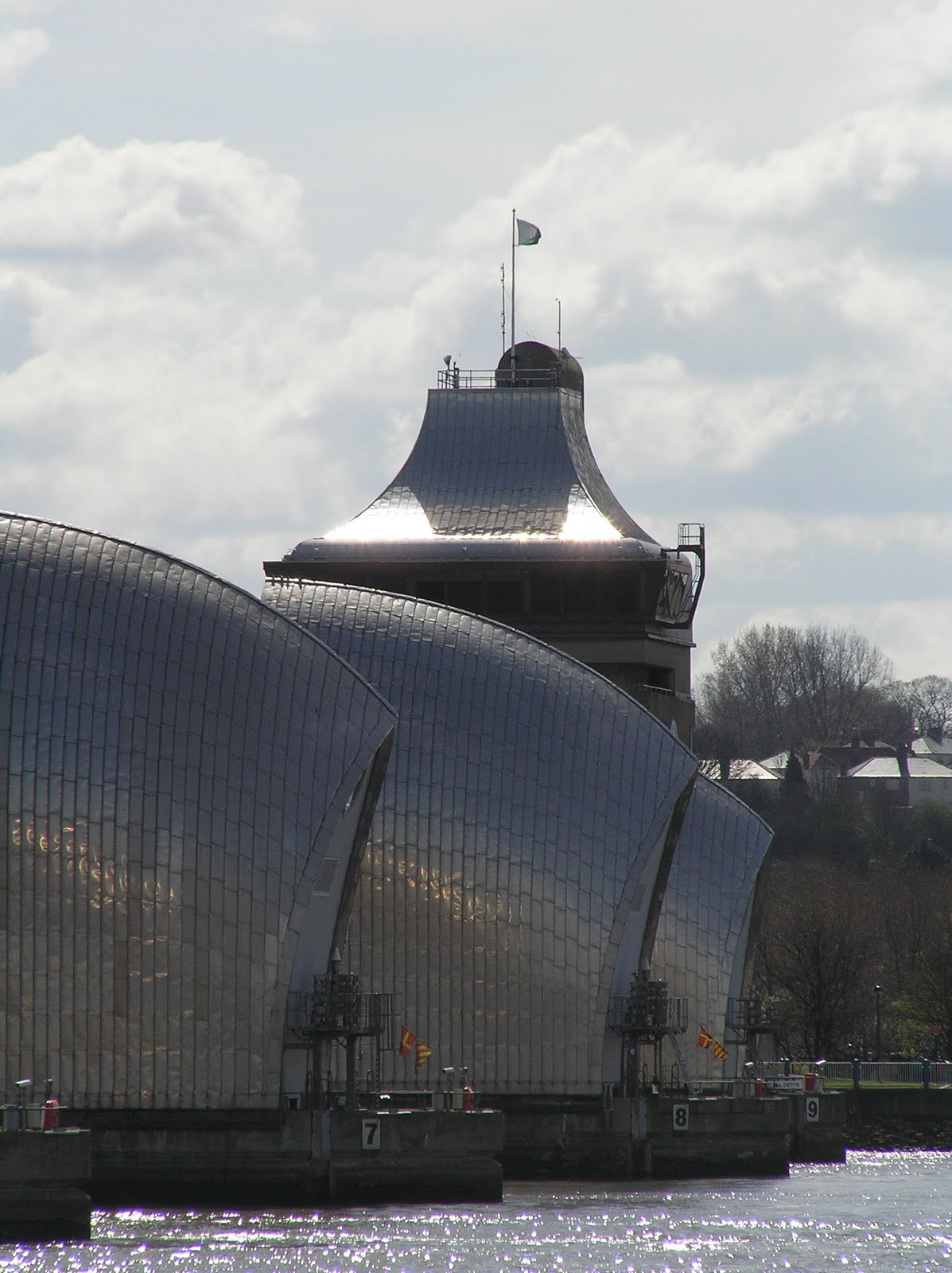
The photos above and below are from a number that I took of the Thames Barrier, the Albert Memorial in London's Kensington Gardens, and some views in The Cotswolds respectively.

Tuesday, April 6, 2010

Onomatopoeia

Tick tock; drip drop; gurgle gurgle; whoosh; flip flop; ahhhhhh. Yes, the sounds of a season winding down are all too familiar, ending with the sounds of my favorite shoes and a big sigh. It's been a winter of big highs and some pretty blue lows but considering the state of the economy, the environment and the world in which we live, it was a good season. Once again, the great joy I find in teaching skiing helps me navigate through stormier and less rewarding waters, and the enthusiasm and energy of the guests with whom I am lucky enough to spend my time continues to be infectious even now.

The last several days were oddly and otherworldly hot and sunny here in Vermont. I arrived at the locker room for work on Saturday morning at the usual time wearing flip flops, shorts and short sleeves. I went through my normal morning routine of signing in, getting my skis ready for the day, and pulling my boots off of the drying rack. I then sat in my usual spot with my boots on the floor next to my feet. I looked at my feet in flip flops, looked at my boots, looked at my feet, looked again at the boots, picked up the boots, replaced them on their spot on the wall, and then went straight to the supervisors' room to say that I had absolutely no intention of changing my footwear that day. Off I went into the summery blue yonder, successfully enjoying the rest of it without so much as a shiver. The following day was the last official one for the Okemo Ski + Ride School – we'll do the occasional lesson this week before the resort closes its doors for the season on Sunday, but for all intents and purposes we're done. There is still snow on the trails, there are still a few lingering people sliding out there (very few), but the looks on the faces of the employees tell the whole story. This week and through the weekend, all of our guests are still welcome and will receive the same consideration and standard of service for which we are justly famous, but we'll all be ready for a little off-season come Sunday.

The relevant sounds for me in the coming weeks, after a little travel to catch up with friends and family, will be those of a newly cleaned drivetrain and spiffy new tires on my road bike, and the groans coming from my not-quite-saddle-ready body. I'm looking forward to it, groans and all.

Tuesday, March 23, 2010

A Proud Countryside

My recent trip to the Adirondacks brought with it a nice break from home and a small preview of the warmer season that is just around the corner. The trip also reminded me of a few of my favorite things about Upstate New York - big mountains that are literally on an Olympic scale, some of our nation's most scenic inland waterways, and a remarkable history visible around every corner. Pictured above is Whiteface Mountain, site of the alpine events from the 1936 and 1980 Winter Olympics. Pictured below is Fort Ticonderoga, a site of major strategic importance during the French and Indian War (the North American portion of the Seven Years War), the American Revolution, and the War of 1812. Last is the view looking south from the town of Whitehall, New York, claimant to the title of birthplace of the U.S. Navy.

Saturday, March 13, 2010

Seeking Inspiration

Frequently over the years as my own skiing and as skiing generally have evolved, I've been very fortunate to have close at hand a number of skiers and coaches who are inspiring – inspiring as skiers, inspiring as teachers and coaches, and inspiring as people. My good fortune in this regard has spoiled me. At those times when I am left to consider skiing without such ski luminaries present, like a lot of former racers and coaches I look to the athletes at the pinnacle of our sport. The problem with this is that normally it's very difficult to follow the athletes of the World Cup and the U.S. Ski Team with any kind of detail or currency, to say nothing of a technical skiing view. The internet has made this vastly easier, as I no longer have to comb the back pages of the sports section or read obscure industry journals (my issues of The American Ski Coach from the early 1990's occasionally provides nostalgic entertainment). Still, it's not the same as seeing the pacesetters of our sport first-hand.

I spend a great deal of time teaching young people who are at the beginning of their ski racing careers or are considering entering race programs. I try to tell them about the young Americans on the U.S. Ski Team and how they train, who they are, and where they're from to put things in perspective. 'We're all just mountain people,' I'll say, 'and we use the same skills and work on the same things that they do.' I worry that ski racing suffers from an image as a far away, obscure pastime for anonymous Americans and for foreigners with names difficult to pronounce. So, despite my impulses to resist telling students personal stories about my childhood heroes and some of the celebrity ski athletes I've met and known, I can't help myself sometimes. And then there are the Olympics.

As much as I am far removed from the Olympics in every way possible, I cannot express how wonderful it was this winter to be able to tell kids about the great ski racers, about the things they are able to do, about how hard they train, and about what great and cool people they are at a time when the same kids can turn on the television and watch our heroes on network TV. Several of my students were able to track the progress of the U.S. Ski Team athletes as the Olympics neared, getting to know their quirks, weaknesses and strengths in the same way they might know the starting lineup of the Yankees or the Red Sox. It's so cool to know 9-year-olds who not only can pronounce Aksel Lund Svindal's name correctly, but know why they think he was favored to win a medal and in which events. The telltale sign of a kid who has spent a lot of time skiing with me is a sense of disgust at the way the conventional press treats Bode Miller. Don't they know anything about ski racing? And then there is Lindsey.

Coaches and teachers in all fields and all sports suffer from a lack of role models who can inspire children in a real and substantive way with the strength of their character as much as with their skills and successes. Lindsey Vonn is just that rare an athlete, and in the context of a coach looking to generate a love of skiing and ski racing and an appreciation of the type of person we all want our children to become, she is rarer still. Unqualified best at her sport? Check. Strong in body and mind? Check. Smart and articulate? Check. Approachable to and appreciative of her fans? Check. Able to overcome adversity? Check. Driven? Double check. Strong work ethic? Are you kidding? Self-taught and fluent in German, owner of a herd of cattle in France, originally from a tiny ski hill in Minnesota, able to leap tall buildings in a single bound? Checkimus maximus. Every time a child in America spends 5 minutes thinking about being like Lindsey Vonn instead of the latest Lindsey Lohan gossip or Britney Spears video is a triumph for all of us, ski racer or not, and every child inspired to race on skis by Lindsey Vonn is a bonus for our sport. It's just a pity we have to wait another four years to watch her in prime time again, but at least she may have touched some young people enough for them to keep watching long after the flame is out in Vancouver.

On a personal note (as though the foregoing isn't personal), I've been lacking inspiration recently. It's been a while since I've really had any transcendent and inspirational experiences relevant to my own skiing. I usually describe this in terms of training, which for me has been sorely lacking in recent years as my responsibility for the training of other instructors has grown. I crave instruction for myself, a sense of the big picture and what is possible to achieve on skis, a fresh perspective, a look at the future, something, anything not the product of my own mind, my own analysis of what I see and my best guess at where our sport is going. So, this coming week, I am going to Whiteface, the Olympic mountain in the Adirondack Mountains of New York, to try to find some. The technical description of what I am doing is that I am trying out for the Eastern Team of PSIA. In the weird little world of ski instruction this is a big deal. The Eastern Division of the Professional Ski Instructors Association of America is selecting from among its members a group to train and send to try out for the PSIA National Demonstration Team in 2012. The demo team is really the national team of ski instructors, truly rarified air.

I am attending the Eastern Team tryout because the participants will be comprised of the best of the best in the East – great skiers and teachers skiing hard on one of the most difficult mountains in the East. It is unusual for me to attend a competition like this with no expectation of success - honestly, I'd consider finishing in the middle of the pack a big success. What I am hoping to accomplish is to gain some perspective and, more importantly, to find some inspiration to fuel the fire of my own skiing and teaching. As much as I am a fan of Lindsey Vonn (and Bode, and Ted, and Julia, Aksel, Maria, Carlo …), I need something more than a matinee idol of a ski racer, something a bit more tangible and closer to home, and more than just a tib-bit here and there, to really find my inspiration.

Besides, a few days out of Ludlow, Vermont with less than a month left in the ski season can only be a good thing. All transmitted good vibes will be welcome.

Wednesday, February 24, 2010

Further Musings

I have several thoughts in process which I have yet to share here - musings on Presidents' Week, the Olympics, and exclamations about the three plus feet of fresh snow that has fallen on our mountain over the past 36 hours. Today at Okemo we could have been excused for feeling as though we had been transported somewhere else, somewhere snowier - Utah, Hokkaido, Gullmarg. OK, maybe that's a stretch, but I have seldom laughed out loud that much while skiing.

Until I put pen to paper and crystallize my thinking, I'll share these two photos from last week. The sun is now rising as I leave from my house to head to work in the morning, and as it crests the hills it sheds light on a nearby pond in a way that is really stunning. There's nothing like a quiet morning on a snowy mountainside to put things in perspective. Enjoy.

Tuesday, February 2, 2010

Shouting at the Wind

Every so often, some self-appointed preservationist shouts from the pages of glossy advertisement-laden magazines about the loss of the soul of skiing. The tone is familiar to all of us who live in ski towns and work in the industry: our focus on the needs of our guests, on attracting new ones, on making a profit in the business of operating ski resorts, and on running our businesses like businesses and not like cute little clubs that may or may not be viable, has killed skiing as we knew it in simpler, kinder and gentler times. Recently, several particularly jaded commentators have speculated out loud from articles and op-ed pieces in magazines – usually sandwiched in between ads for Range Rover and for exclusive real estate investment opportunities – about whether the current economic recession has resulted in the return of skiing to the 'real skiers'. Apparently, according to these people, one cannot be affluent and be a real skier. In fact, I'm a bit uncertain about what the criteria are for being a 'real skier'. Does the fact that I have a graduate degree or the fact that I've never lived out of my car for a winter disqualify me? Unclear.

In many respects, anyone who feels that somehow our industry has lost its soul, that it has left behind the values that imbued its beginnings or has sold out to the all-mighty dollar clearly is living off of a trust fund, is a socialist who thinks that all of us should be supported by the government, or is totally out of touch with reality. The expression 'biting the hand that feeds you' seems apropos. Most important of all, those self-appointed preservationists themselves have lost sight of the most important thing about life in the mountains and in the ski industry: it is an essential tenet of what we do and why we do it that we strive to share our mountains with all who wish to join us.

It is true that there always will be tension between locals and tourists, between natives and transplants, and between those who prefer to keep our resorts intimate and rustic and those who wish to develop on a large scale. These tensions are natural and are at times difficult to manage, but they serve the important purpose of keeping all of our eyes on the values underlying our devotions. I am very fortunate to live and work in Ludlow, Vermont and at Okemo Mountain Resort. All of us here agree that our location in a real, pre-existing and hard-working town is one of our resort's greatest strengths. Ludlow is not a pre-fab, pre-planned, developer's concept of a village and I assume that our guests like it that way. People coming to Vermont for a vacation (in whatever season) want to come to Vermont, not some faux version of Vermont. We welcome them to our town and work to make our town and our resort attractive to them while making sure to not lose our authenticity. Keeping it real, in this sense, is sometimes easier said than done and there definitely are resort towns all over America that have lost much of that authenticity, if they ever had any at all. Somehow, though, even those towns that did not pre-exist their ski business still have a real life to them, avoiding Gertude Stein's admonition about there being no there there.

As for the soul of skiing itself, I for one believe it is alive and well and easily found everywhere one looks. We just have to pay attention and see the forest for the trees. For example, this past weekend it was cold here in Vermont, very cold. I mean it was seriously cover-every-last-bit-of-skin frigid. But the sun was out, the skiing was terrific, and the people came out in droves. Our mountain was crowded for a non-holiday weekend and, though I'm not sure what the head count was or how many hot chocolates the resort sold, there were certainly a lot of people out there enjoying the day. If that many people – young and old, local and tourist, green circle and double diamond, party and parsimony – are willing to schlep up to the ski hill, strap on some boards and slide around all day in sub-zero temperatures (Fahrenheit), there's something going on and it's not the death of skiing as we know and love it. It may be some sort of dementia, it may not be the most practical use of our time, it may mean there are some geese missing their feathers, but it's a good thing nonetheless.

In the current economic climate, several major resorts have been sold and many more are not doing well. Notably, Intrawest, the operator of several of the largest ski resorts in North America, has just filed for bankruptcy. We've all trimmed our budgets, hired smaller staffs, and set modest goals for the winter. It's a tough industry in which to survive even in the best of circumstances – whether as the owners of a resort, the managers of it, or certainly as a ski instructor. As in the case of our guests when the weather turned cold, when the climate turns difficult we see the real enthusiasm of our colleagues and friends as we rededicate ourselves to the choice we've made to be here doing what we do.

Ultimately, some people simply prefer to shout at the wind. They are welcome to do so, even if it is from the pages of glossy ski magazines. I think it must be hard to shout like that with one's face covered to protect against frostbite when the temperatures drop. Then again, maybe the 'protectors of our soul' just choose to bring their soapbox indoors on those days for a non-fat extra hot foam latte to commiserate with their friends about the cold and the tourists while I and mine are outside expressing our love for a life in the mountains with all who will join us. I'll see you out there!